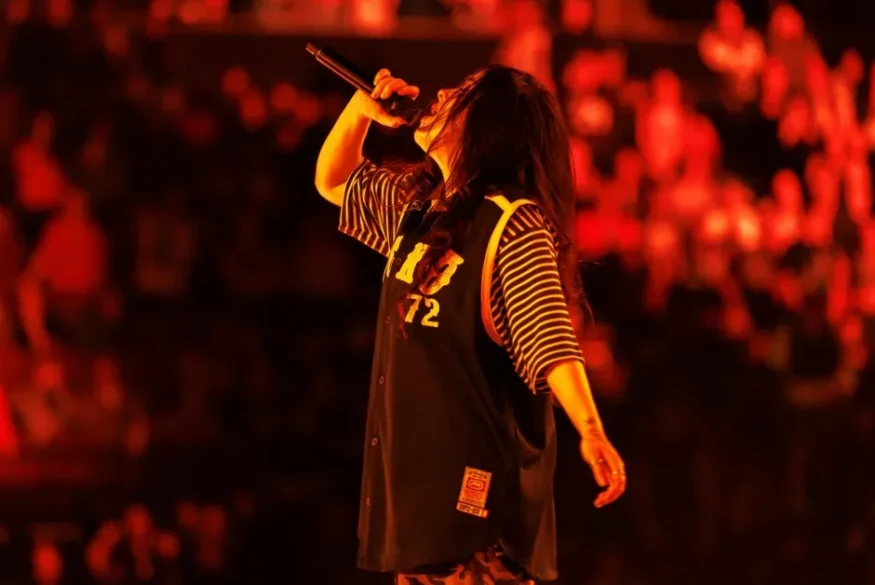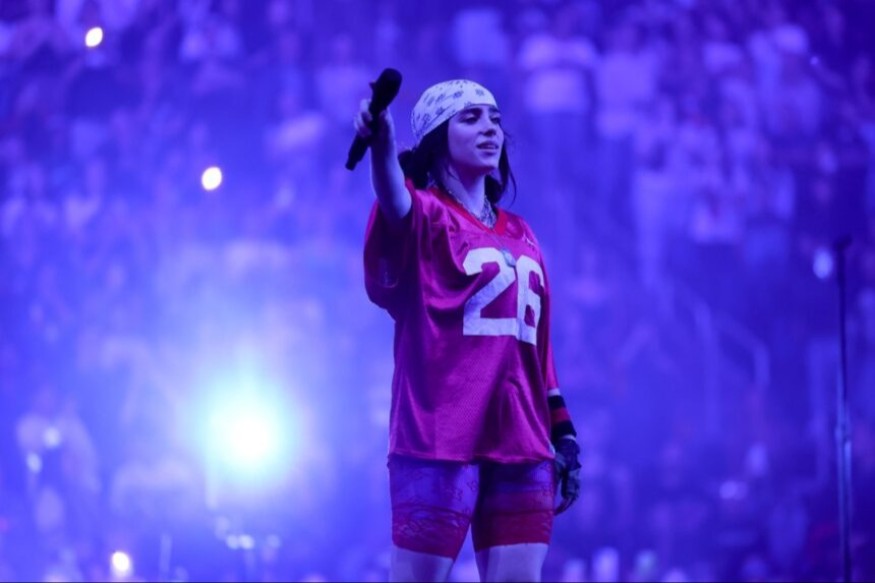
Billie Eilish reveals how a painful dance injury unexpectedly changed the course of her entire life, pushing her away from the stage she once dreamed of and leading her directly into music. What initially felt like the end of everything eventually became the beginning of one of the most influential careers of her generation.
What really changed Billie Eilish’s future:
For years, Billie Eilish believed dance would define her life.
A sudden injury stopped everything — and opened the door to music instead.
Billie Eilish never originally planned to become a global music star. Long before sold-out arenas, Grammy wins and billion-stream hits, her world revolved entirely around dance. As a child and teenager growing up in Los Angeles, her routine was structured around rehearsals, choreography sessions and performances, with a clear goal already shaping her future: becoming a professional dancer.
Dance was not simply a hobby for Billie Eilish — it was her identity. She spent years building discipline around it, investing both emotionally and physically into the idea that the stage would eventually become her permanent home. At that point in her life, music existed in the background, but it was never the central focus. Everything changed unexpectedly during rehearsals for an important dance competition.
During one of her final practices, Billie Eilish suddenly felt intense pain in her hip while repeating choreography. What initially seemed minor quickly escalated into something much more serious. Within moments, she realized her body could no longer keep up with the demands of dancing. The injury immediately disrupted the path she had imagined for herself for years, leaving her physically limited and emotionally overwhelmed.
“Sometimes the moment that feels like it ruins your life is actually the moment that changes it forever.”
The days that followed became emotionally difficult. Billie Eilish suddenly found herself unable to move freely or continue training, forced into a period of stillness that contrasted sharply with the highly active lifestyle she had always known. For someone whose entire future revolved around performance and movement, the psychological impact was enormous. The loss wasn’t just physical — it felt personal.
That transition from constant activity to immobility created uncertainty. Billie Eilish has explained that she struggled to understand what direction her life could possibly take after dance disappeared from the center of it. The future she had carefully built in her mind seemed to collapse almost overnight, leaving behind confusion, frustration and disappointment.
At the same time, however, something unexpected was beginning to happen behind the scenes. Together with her brother Finneas, Billie Eilish had recorded a song titled “Ocean Eyes.” Originally, the track was created for a dance-related purpose and uploaded online without any major expectations attached to it. There was no calculated industry strategy behind its release, nor any assumption that it would eventually become the turning point of her career.
The timing proved almost surreal. While Billie Eilish was recovering from the injury that removed dance from her life, “Ocean Eyes” slowly began attracting attention online. Streams increased rapidly, music industry professionals started noticing the track and conversations around her voice and artistic identity started growing organically. At the exact moment one dream was ending, another was quietly beginning.
Billie Eilish didn’t chase music at first — music arrived when everything else stopped.
The contrast between those two realities became defining. Physically, Billie Eilish was still dealing with the emotional and physical aftermath of her injury, often struggling simply to move comfortably. Yet simultaneously, she was entering meetings, receiving industry interest and witnessing the beginning of something entirely new. It was a strange collision between vulnerability and opportunity.
As months passed, music gradually moved from the background into the center of her life. The creative partnership between Billie Eilish and Finneas evolved naturally, developing into one of the most recognizable collaborations in modern pop music. Together, they built a sound rooted in intimacy, minimalism and emotional honesty — something that immediately separated them from the polished formulas dominating mainstream pop at the time.
The transition was not instant or effortless. Billie Eilish has openly acknowledged that accepting the end of her dance ambitions took time. Losing something she loved deeply forced her to rethink who she was outside of that world. But music eventually gave her a different form of expression — one that allowed emotion, storytelling and creativity to replace movement as the core of her artistic identity.
Looking back now, Billie Eilish sees that difficult period differently. What once felt devastating eventually revealed itself as a turning point that redirected her toward something she never could have predicted. Rather than viewing the injury purely as a loss, she recognizes it as the moment that pushed her toward discovering another version of herself.
That perspective has shaped the way she approaches setbacks today. Billie Eilish often speaks about challenges not simply as endings, but as moments capable of creating unexpected beginnings. The experience taught her that personal disruption can sometimes open paths that would otherwise remain invisible.
Her relationship with music is deeply connected to that realization. The emotional honesty that defines much of her work comes partly from understanding uncertainty, vulnerability and reinvention at a young age. Instead of building her career around perfection, Billie Eilish built it around authenticity — something audiences connected with almost immediately.
The story behind her rise also explains why so many listeners identify with her journey. Billie Eilish represents a generation that understands how quickly plans can change and how identity itself can evolve through unexpected experiences. Her success story is not simply about talent or timing; it is also about adaptation and resilience.
Today, Billie Eilish continues to reference that chapter of her life as one of the most important experiences she has ever gone through. Not because it instantly transformed her into a star, but because it forced her to rediscover herself from the beginning. The injury that once felt catastrophic ultimately became the event that redirected her life toward music — and toward a career that reshaped modern pop culture.