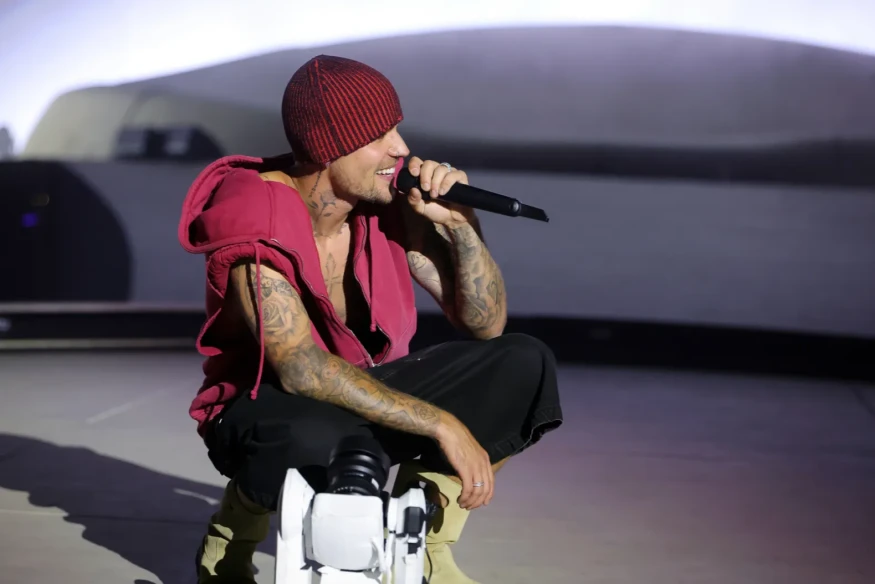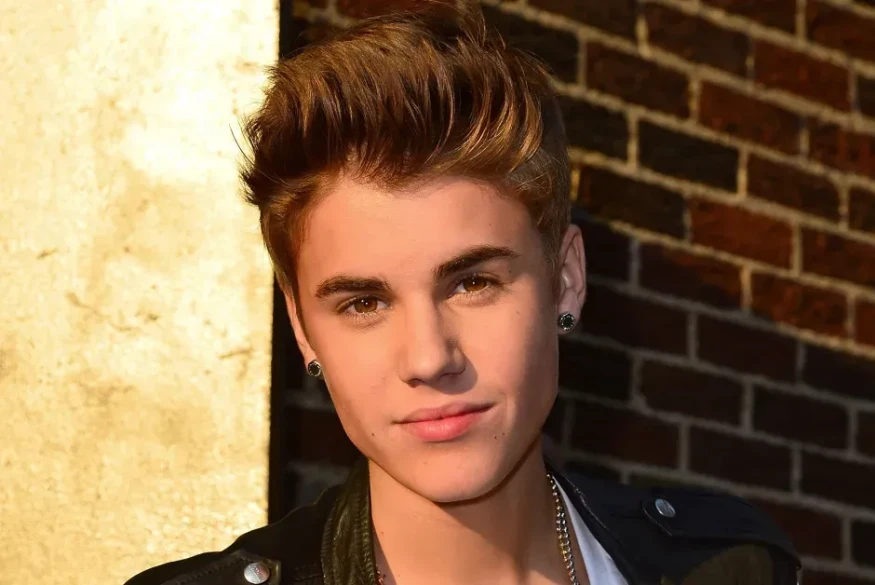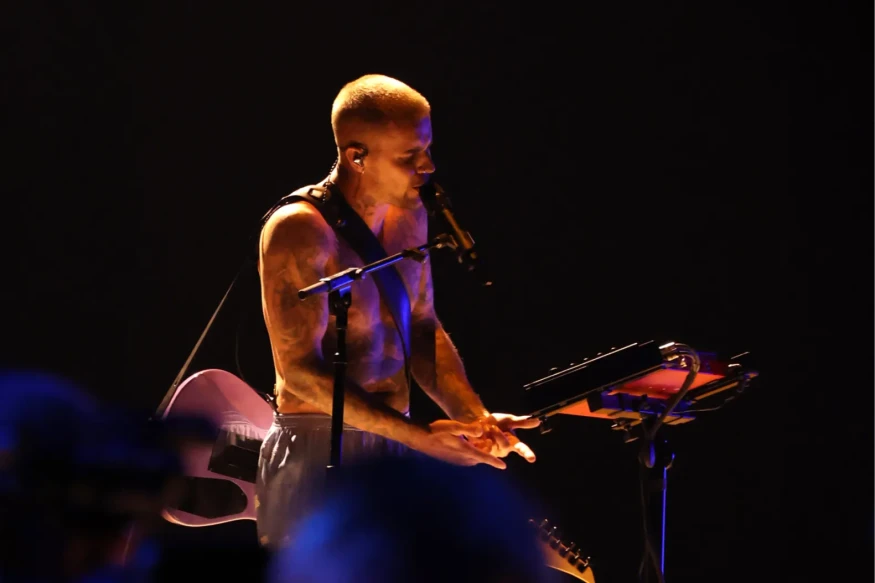
Justin Bieber’s return at Coachella 2026 didn’t just create headlines — it completely reshaped his streaming numbers, pushing him past 140 million monthly Spotify listeners and giving him the biggest streaming moment of his entire career. After years of limited public appearances and uncertainty surrounding his health, the festival became the turning point that reconnected him with a global audience on an enormous scale.
What changed after Coachella:
Justin Bieber became the most listened-to artist on Spotify globally.
At the same time, older hits from across his career suddenly returned to the streaming charts.
Justin Bieber is currently experiencing one of the most dramatic streaming surges ever seen in modern pop music. The momentum began building quietly in the weeks leading up to Coachella 2026, but the festival ultimately transformed into something much larger than a standard live appearance. For many fans, it felt like the first true return of Justin Bieber to the center of global pop culture since the abrupt end of the Justice Tour in 2022.
According to newly released Spotify data, Bieber surpassed 140 million monthly listeners worldwide shortly after his Coachella performances, setting a new personal career record. The number continued climbing in the days that followed, confirming that the impact extended far beyond the festival itself. What started as a live comeback quickly became one of the year’s biggest streaming stories.
The growth was unusually rapid. At the beginning of April, before the festival’s first weekend, Justin Bieber reportedly had just under 100 million monthly Spotify listeners. Within days, that figure jumped dramatically, first crossing 110 million before accelerating even further once clips from the performances flooded TikTok, Instagram and X. By the end of the festival, Bieber had also achieved the single biggest streaming day of his career.
“Justin Bieber’s Coachella return instantly became one of the biggest streaming explosions of 2026.”
Part of the emotional weight surrounding the performances came from the fact that Coachella marked Bieber’s first major public live appearance since the cancellation of the Justice Tour. That tour had been interrupted because of ongoing health issues, creating years of uncertainty about whether he would fully return to large-scale performances again.
During that period, Justin Bieber kept a significantly lower public profile. Aside from occasional appearances, private performances and a handful of collaborations, he largely stepped away from the nonstop visibility that once defined his career. Because of that absence, Coachella carried symbolic importance not only for fans, but also for the broader music industry.
The performances immediately dominated social media. Clips from the festival spread across platforms within hours, generating millions of views and reigniting conversation around Bieber’s entire catalog. Collaborations and appearances alongside artists including Billie Eilish, SZA, Kid Laroi and Dijon amplified the excitement even further, turning the sets into some of the festival’s most discussed moments.
What surprised many observers most, however, was the effect the performances had on older songs from Bieber’s catalog. Rather than focusing only on newer material, listeners began revisiting music from nearly every phase of his career.
The clearest example was “Beauty and a Beat,” Bieber’s 2012 collaboration with Nicki Minaj. The song suddenly exploded again across streaming platforms after live moments from Coachella circulated online. Within days, the track accumulated tens of millions of additional streams and rapidly climbed back into streaming conversations more than a decade after its original release.
Justin Bieber’s older hits suddenly returned to streaming charts almost fifteen years after first dominating pop music.
The nostalgia wave quickly spread beyond one song. Tracks like “Baby,” “Never Say Never” and “Eenie Meenie” also experienced major streaming increases as fans began resharing old performances, music videos and early-career interviews online. Entire eras of Bieber’s career were rediscovered simultaneously, creating a rare moment where longtime fans and younger audiences connected around the same music.
At the same time, more recent hits including “Sorry,” “Love Yourself” and “Daisies” also surged in streams, showing that listeners were not simply revisiting the past — they were reconnecting with Bieber’s overall catalog. That balance between nostalgia and modern relevance played a major role in pushing him to the top position globally on Spotify.
The timing of the comeback is especially significant considering the conversations surrounding Bieber over the last several years. Questions about his health, public pressure and future in music had remained constant topics inside fan communities and entertainment media. Although he never fully disappeared, his presence became noticeably quieter compared to earlier periods when he dominated both charts and public attention continuously.
Coachella changed that narrative almost immediately. Instead of appearing cautious or distant, Justin Bieber looked energized, emotionally present and fully connected to the audience again. For many fans, that emotional visibility became just as important as the music itself.
The response also highlighted how powerful Bieber’s relationship with streaming audiences still remains. In an era where public attention shifts rapidly and streaming culture changes constantly, maintaining long-term relevance is increasingly difficult. Yet Bieber’s catalog proved capable of generating massive engagement across multiple generations at the same time.
Shortly before Coachella, Bieber had already hinted at renewed activity through a smaller private performance attended by selected fans. At the time, some speculated that a larger comeback could eventually follow, though few expected the impact to become this immediate or this massive.
The scale of the streaming surge now places Justin Bieber back at the center of global pop conversations. More importantly, it suggests that his audience never truly disappeared — it was simply waiting for a moment strong enough to reconnect emotionally with him again.
That moment finally arrived at Coachella.