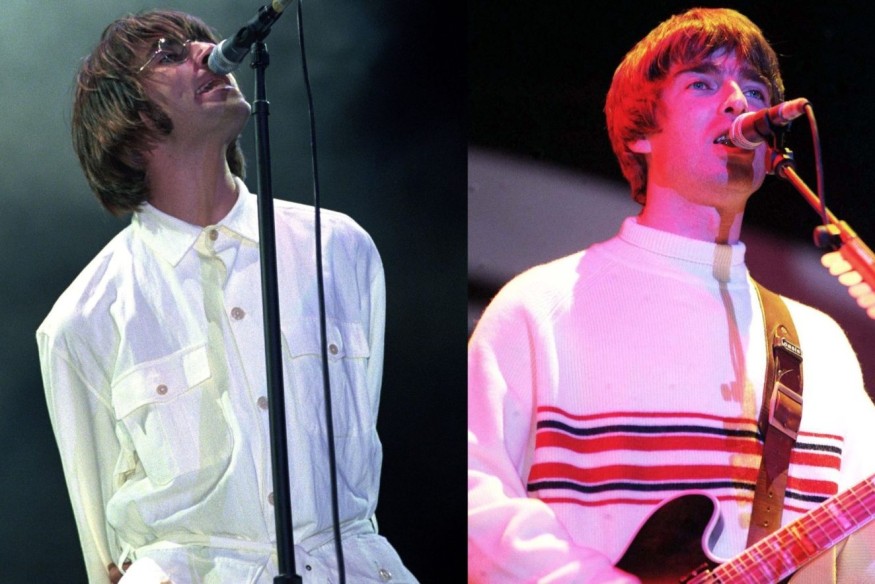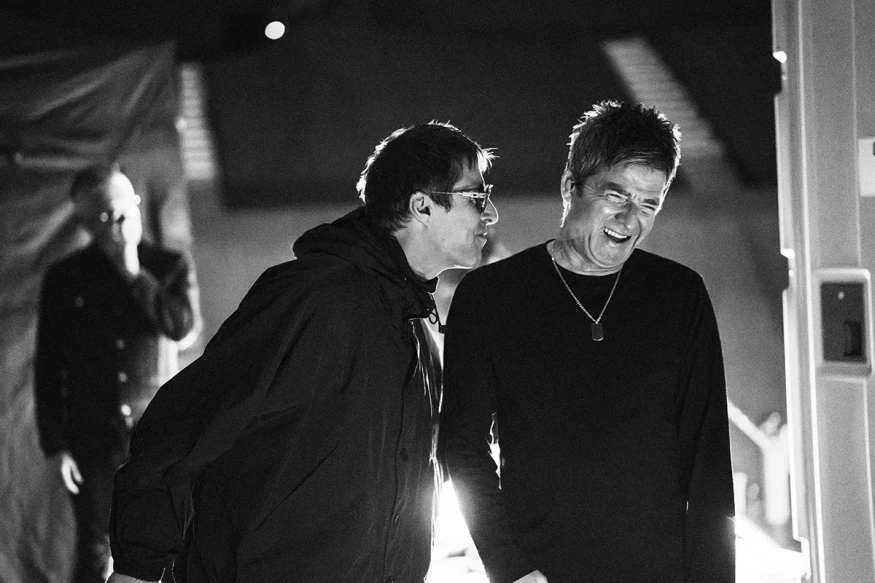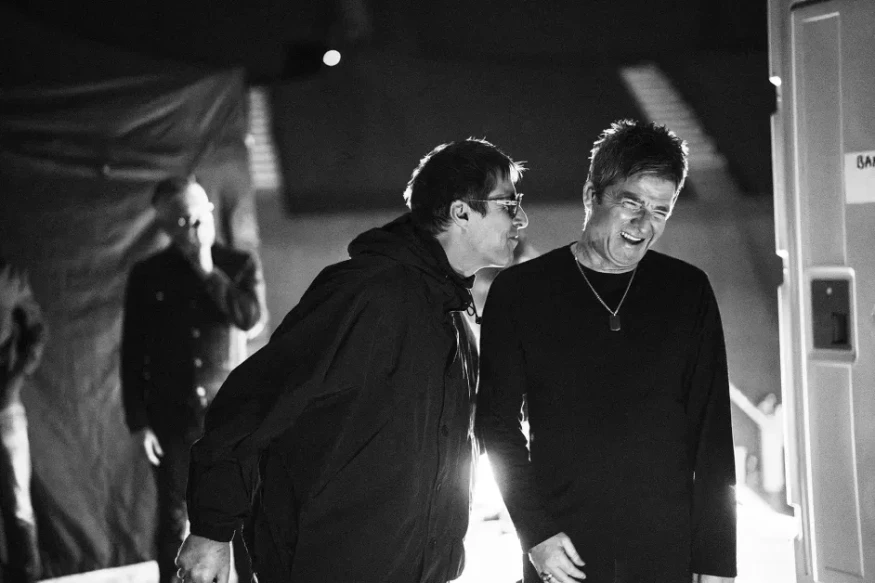
Oasis have confirmed that their reunion will continue with “Oasis Live ’27,” a 38-show run across the UK, mainland Europe, the United States and Ireland. Most of the new dates move into different cities and venues from “Live ’25,” while Manchester remains a major focus and four September concerts at Knebworth bring the band back to one of the defining locations of their history.
Oasis have removed the last real uncertainty around their reunion. Liam and Noel Gallagher will stay on the road in 2027 for another 38 shows, extending a comeback that has already moved well beyond the idea of a one-season event.
“Oasis Live ’27” begins in Glasgow on May 21 and takes the band through Manchester, Munich, Barcelona, Amsterdam, Paris and Rome before moving to the United States for stadium dates near Boston and in Las Vegas. Ireland follows with a show at Slane Castle, while the final four concerts are scheduled for Knebworth on September 11, 12, 18 and 19.
The shape of the tour is almost as important as the number of shows. Apart from Manchester, Oasis are largely avoiding the cities that formed the backbone of “Live ’25.” The first reunion run had already taken the band through Toronto, Chicago and Los Angeles in North America, for example. This time, Boston and Las Vegas take their place. The same pattern appears across Europe, where the 2027 itinerary is built around a fresh group of major markets.
That decision gives the new tour a reason to exist beyond simply repeating a successful comeback. “Live ’25” was always going to be dominated by the sight of Liam and Noel sharing a stage again. Years of arguments, failed reunion rumors and separate careers had made that image powerful enough on its own. By 2027, the novelty will be different. Oasis will no longer be proving that the reunion can happen. They will be showing what it looks like once the reunion has become an active part of the band’s present.
Manchester remains the obvious exception to the new geography. Eleven shows at the Etihad Stadium are scheduled across June, making the city the biggest single stop on the entire tour. For Oasis, that is more than a practical block of stadium dates. Manchester has always been inseparable from the band’s identity, and the scale of the Etihad run turns the homecoming into one of the main events of the 2027 schedule.
The venue had already appeared in reports before the announcement, just as Knebworth had. For weeks, both locations sat in that familiar Oasis space between rumor and deliberate teasing. Noel Gallagher had said the band needed to “do something in the summer,” while Liam had ruled out Glastonbury. None of that amounted to a tour announcement, but it created enough movement to make 2027 look increasingly likely.
Now the speculation has been replaced by dates.
Knebworth carries a different kind of weight. Oasis played two concerts there in August 1996 at the height of their first great run, and the shows have remained part of the band’s mythology ever since. They represented a moment when Oasis had become far bigger than a successful British rock group and had started to look like a cultural event in their own right.
Returning there 31 years later immediately changes the tone of the final four shows. The comparison with 1996 will be unavoidable, but the appeal is not in pretending that the same moment can happen twice. The circumstances could hardly be more different. The band have broken up, spent years apart, built separate careers and then returned to the stage after a long period in which a reunion often seemed impossible.
That history is what makes Knebworth feel like a natural final stop. Oasis are not going back as the band they were in 1996. They are returning after everything that happened next.
The American dates follow the broader logic of the tour. Three shows are scheduled at Gillette Stadium in the Boston area and three more at Allegiant Stadium in Las Vegas. Both are new stops for the reunion, giving the 2027 run a stronger sense of expansion rather than repetition. The stadium scale remains intact, but the audience map changes.
Mainland Europe follows the same pattern, with Munich, Barcelona, Amsterdam, Paris and Rome all part of the new itinerary. The choice of major cities keeps the reunion firmly at arena and stadium level while opening the next phase to fans who were not part of the first route.
Richard Ashcroft will support Oasis across all currently announced dates. His presence gives the tour a consistent opening act instead of a rotating list of regional guests and also adds another unmistakably British reference point to a bill already carrying a huge amount of 1990s history.
The announcement itself played directly with that history. The video mixed footage from Oasis’ original era with images from the reunion before moving into “Morning Glory?” and the 2027 dates. The band’s message kept the usual dry humor intact, referring to a period of reflection before declaring themselves ready to return to action.
The joke works because the decision behind it is much larger than another anniversary campaign. When Oasis first announced the reunion, the question was whether Liam and Noel could actually get through it. Once the first shows began, attention shifted toward whether the band could maintain the momentum beyond that initial wave.
A 38-show schedule for 2027 gives the clearest answer so far.
It does not, however, settle every question about the future of Oasis. Noel Gallagher has already played down expectations of new music, and nothing in the latest announcement points toward a new album. “Oasis Live ’27” is about touring, not a studio comeback, and the distinction matters. The band have confirmed where they will play next year; they have not announced a new recording chapter.
The 38 shows should also be treated as the schedule that exists now rather than a guaranteed final total. More dates could be added later, particularly if demand creates room for extra nights, but there is no reason to assume that before anything is announced. The same applies to calling the tour a full world tour. The current itinerary covers the UK, mainland Europe, the United States and Ireland. Other regions are not part of the announcement at this stage.
Ticket access will again be tightly controlled. Fans need to register through the official Oasis website by September 17, after which selected applicants will receive a unique, non-transferable code for a specific purchase window. Tickets for the US shows are due to go on sale on September 25, with different times for each market.
Those practical details will dominate the immediate rush around the announcement, but the larger shift is already visible in the schedule itself. Oasis are no longer approaching the reunion as a single historic return that happens once and then disappears. The band have given it another summer, another route and another sequence of stadiums.
That makes “Oasis Live ’27” a more interesting proposition than a straightforward extension of “Live ’25.” The first tour carried the emotional charge of seeing Oasis together again. The next one has to live without relying entirely on that surprise. By moving into new cities and treating Manchester and Knebworth as major destination events, the band are giving the second phase its own shape.
Manchester offers the scale. Knebworth provides the history.
Between them sits a tour that reaches across Europe, the United States and Ireland without simply tracing the same path as the first reunion. That is the clearest sign of how much the situation has changed since Oasis first announced they were coming back.
By the time Liam and Noel walk onto the Knebworth stage in September 2027, 31 years will have passed since the concerts that helped define the first era of the band. The road back there now runs through a breakup, separate careers, years of public hostility and two large touring cycles that once seemed unlikely to exist at all.
“Oasis Live ’27” begins in Glasgow in May. What follows is not another attempt to recreate 1996, but a new stretch of the Oasis story built around the fact that, for now at least, Liam and Noel are still choosing to keep the band on the road.