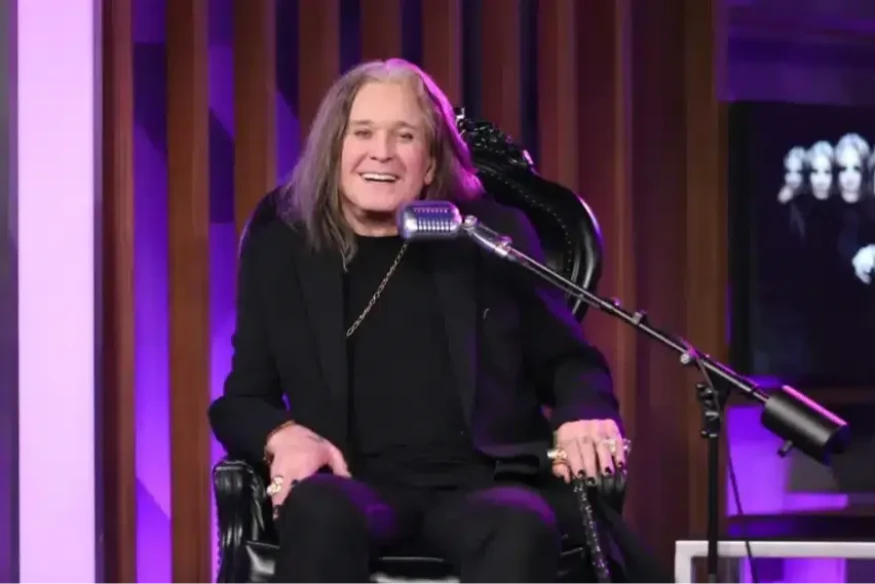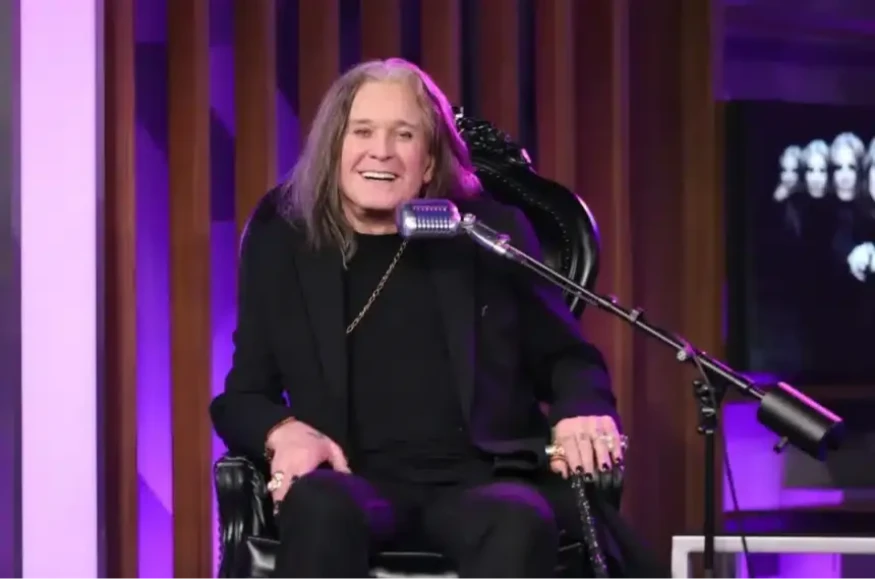
Ozzy Osbourne had already survived enough rock ’n’ roll chaos to make almost anything seem normal. But touring with Mötley Crüe in the 1980s pushed even the Prince of Darkness beyond his comfort zone. What started as a powerful heavy metal pairing became a world of nonstop partying, dangerous excess and increasingly reckless behavior, leaving Osbourne genuinely worried that someone might not make it home alive.
Ozzy Osbourne was hardly the kind of rock star anyone expected to complain that a tour was getting out of control. By the time he hit the road with Mötley Crüe in the 1980s, his own reputation for excess was already legendary. He had spent years surrounded by alcohol, drugs, wild backstage stories and the kind of behavior that had made him one of rock’s most unpredictable figures. Yet even Ozzy eventually looked at what was happening around him and realized that this particular adventure was moving into dangerous territory.
The timing made the experience even more important in Ozzy Osbourne’s career. After leaving Black Sabbath, he had successfully rebuilt himself as a solo artist and proved that his future did not depend on his former band. His early solo albums had established a new identity, but he was also entering an era when heavy metal itself was changing fast. MTV had made image almost as important as sound, music videos were shaping stars, and live shows were becoming bigger and more theatrical. Songs such as “Shot in the Dark” showed that Ozzy understood the shift. He was no longer simply carrying the darkness of the 1970s into another decade. He was learning how to survive in a louder, brighter and increasingly visual version of metal.
Of course, Ozzy Osbourne already had more than enough personality to fill any screen. The bat incident had become part of rock history, and stories about his behavior followed him everywhere. The public image was outrageous, funny, frightening and often impossible to separate from the real person behind it. But people who spent time with Ozzy also described another side of him. He could be warm with musicians and fans, talk endlessly about the Beatles and show real affection toward people who shared his love of music. That contrast is important because it explains why his reaction to the Mötley Crüe tour carried so much weight.
Ozzy was not discovering for the first time that rock stars could behave badly. He knew exactly what addiction, reckless decisions and life on the road could do to people. By then, he had already experienced major personal loss, including the death of guitarist Randy Rhoads, whose playing had been central to the first chapter of Ozzy’s solo career. He understood that the distance between a crazy story and a tragedy could be very small. When Mötley Crüe entered his world, however, the level of competition and excess appeared to push that line even further.
Mötley Crüe were young, ambitious and rapidly becoming one of the defining bands of their generation. They were not interested in behaving like ordinary musicians who played a show and went back to their hotel rooms. Their image depended partly on the feeling that rules did not apply to them. Nikki Sixx, Vince Neil, Tommy Lee and Mick Mars represented a new version of rock-star excess, where the music, clothes, sex, parties and scandals all became part of the same package. Putting Ozzy Osbourne and Mötley Crüe together on one tour created an explosive combination before anyone even walked onstage.
Musically, the pairing made perfect sense. Ozzy was already an established heavy metal star, while Mötley Crüe were climbing quickly and bringing a younger, dirtier and more glamorous energy with them. Audiences were getting two different generations of metal in the same night. Away from the stage, though, the atmosphere became increasingly difficult to control. Ozzy later remembered Mötley Crüe as a force that simply could not be ignored. Eventually, even a man famous for having almost no limits reportedly told manager Doc McGhee that things were becoming too crazy.
That admission says almost everything about the atmosphere surrounding the tour. When Ozzy Osbourne becomes the person worried that everyone is partying too hard, the normal scale of rock-star behavior has clearly disappeared. The stories that survived from this period have become some of the most famous tales in metal history. Ozzy and Nikki Sixx were said to challenge each other to increasingly disgusting and reckless acts, as if every new stunt had to beat whatever had happened the night before. Some stories became so unbelievable that they now sound more like scenes from a dark comedy than memories from an actual tour.
The problem is that the danger surrounding this lifestyle was not imaginary. The death of Hanoi Rocks drummer Razzle became one of the darkest events connected to that wider period. Razzle died in a car crash involving Vince Neil after a party during a break in touring. Suddenly, the possibility that somebody could die was no longer simply something people joked about after another chaotic night. A young musician was dead, and the consequences of the lifestyle surrounding these bands had become painfully real.
That moment changes how many of the famous Ozzy Osbourne and Mötley Crüe stories look today. Tales involving alcohol, drugs, urine, ants and bizarre contests have often been repeated as funny examples of how extreme rock culture once was. They are entertaining because they seem impossible now, and because the people involved survived to tell many of them. But underneath the comedy was a culture in which self-destruction could become entertainment. Being more reckless than everyone else was almost a form of status, and stopping could look less impressive than continuing.
For younger fans discovering these stories decades later, the period can easily seem like a fantasy version of rock ’n’ roll. There were huge shows, expensive hotels, famous musicians and apparently endless parties. The reality was far less glamorous. Addiction, injuries, car crashes and death were never far away. There were nights when people around these bands could not be certain what condition everyone would be in the following morning. Ozzy Osbourne understood that reality because he was living through his own destructive habits at the same time.
The tour also captured a major change taking place inside heavy metal. Ozzy belonged to a generation shaped by the darker, heavier world of the 1970s. Mötley Crüe represented what was coming next. The new scene was brighter, faster and built for television. Hair, leather, makeup, sex and scandal became part of the visual language of the music. Fans were not simply buying albums or concert tickets anymore. They were buying into a lifestyle where musicians seemed to live without normal limits, and Mötley Crüe turned that promise into a major part of their identity.
Ozzy Osbourne fit strangely well into this new world because he had already spent years becoming a larger-than-life character. Yet the tour also showed why his relationship with that image was more complicated than it appeared. The Prince of Darkness could play the wild man onstage and still recognize fear when the party ended. He had already seen careers damaged, friendships destroyed and people lost. His concern was not coming from someone watching the madness from outside. It came from someone standing directly in the middle of it.
That is what makes the story more powerful than another collection of outrageous backstage memories. Ozzy Osbourne and Mötley Crüe created exactly the kind of tour that heavy metal mythology was built to celebrate: loud shows, huge personalities and almost no visible rules. At the same time, the experience exposed how quickly that mythology could become dangerous when nobody wanted to be the first person to stop.
Years later, the wildest stories would continue to be repeated in interviews, books and documentaries, often becoming bigger with every retelling. Ozzy Osbourne remained one of rock’s ultimate survivors, while Mötley Crüe built an entire legend around living close to disaster. But beneath all the famous stories was the fear Ozzy remembered from the road: the feeling that the next night might finally go too far. On a tour where excess had become part of the daily routine, even Ozzy reached a point where he could look around and wonder who would still be there for the next show.